

Thinking about selling your company is rarely a sudden decision. It builds over years, shaped by late nights, payroll cycles, customer relationships, and the quiet question of what comes next. Before you list the business or entertain an offer, a business valuation in Markham that owners can actually trust gives you something more useful than a price tag. It gives you a clear-eyed picture of what your company is worth to a serious buyer, and why.
A proper valuation looks past the surface numbers. Revenue matters, but buyers pay for sustainable earnings, not top-line noise. Your valuator will separate one-time events from repeatable income, rework owner compensation that wouldn’t carry over to new ownership, and normalize expenses tied to personal choices rather than day-to-day operations.
Earnings quality gets the next layer of attention. If your top three clients drive 70% of revenue, that concentration shows up as risk. If your strongest technician happens to be your cousin, a buyer will wonder whether he stays once you walk away. Seasoned valuators flag these patterns early, long before a buyer’s advisor turns them into leverage at the negotiating table. The point is to bring the hard questions into the open while you still have time to answer them.
The Hidden Story Your Financials Tell
Your tax returns and balance sheets are merely chapter one. When you bring in a valuation professional, you are asking them to read the story those numbers leave out. They track the daily rhythm of your working capital, question your reliance on a single supplier, and test whether your profit margins can survive new local competition.
You might be caught off guard by what actually catches their attention. A routine review often brings up realities you step past every day, such as:
- Warehouse stock is recorded at cost, but is practically obsolete in the current market
- Brand value that relies entirely on your personal handshakes rather than the company’s reputation
- Aging machinery you delayed replacing, which a buyer will instantly subtract from their offer
- Client agreements missing simple transfer clauses, threatening to stall the transition
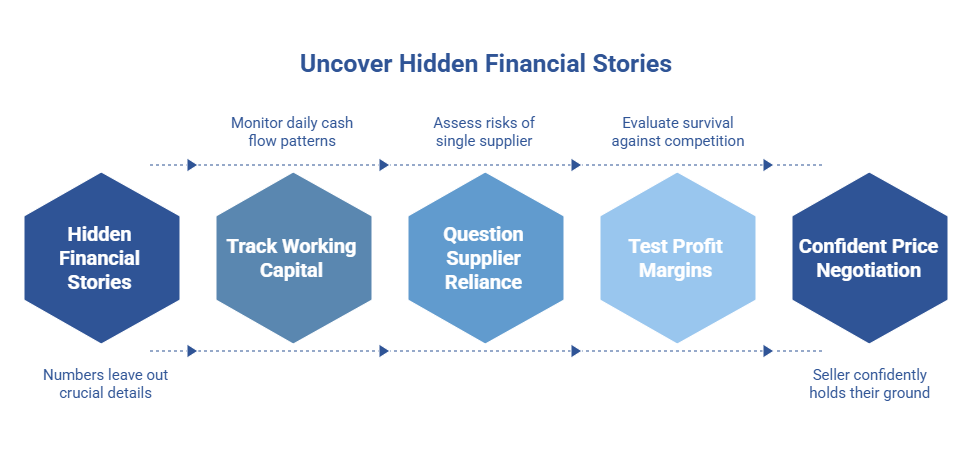
None of these findings will ruin a sale on their own. Finding out about them months before a buyer starts asking questions gives you the upper hand. It transforms you from a seller scrambling to make excuses into an owner who can confidently hold their ground on price.
A Local Perspective Matters
Markham is its own market, and that matters when you are preparing to sell. The local mix of tech companies, manufacturers, professional practices, and family-run businesses shapes how buyers assess value. Recent transactions in the area, buyer demand within the region, and even the fine print in commercial leases along certain corridors can all influence the final picture. When your valuator knows the local business environment, your report is grounded in the market a real buyer is stepping into, not a broad average pulled from somewhere else.
That local understanding also matters when intangible assets come into play. Recognition in York Region, supplier relationships built over many years, and a team with strong ties to the community can all add real weight to a valuation when they are properly supported. Without that context, these assets are easy to overlook or discount, especially when the analysis comes from someone with no feel for the area.
Preparing for the Conversations That Follow
Once your valuation is complete, the report becomes a working document. You’ll use it to set a realistic asking range, to brief your lawyer and accountant, and to anticipate the questions a buyer’s due diligence team will raise. If a shareholder is involved, the valuation grounds internal discussions in numbers rather than opinions. If the sale ties into tax or estate planning, the same report supports your filings and any reorganization work needed before closing.
That’s what a valuation actually reveals. Not just a number, but a roadmap. It shows you where value lives, where it leaks, and what a patient, prepared seller can do about it before the market decides for them.
Selling is a chapter, not an event, and the work you do before listing tends to matter more than the negotiation itself. A credible valuation from an independent team gives you the footing to sell on your terms, with documentation that holds up when scrutiny arrives. If you’re starting to think about what comes next for your Markham business, the right time to get clarity is well before the first buyer calls.